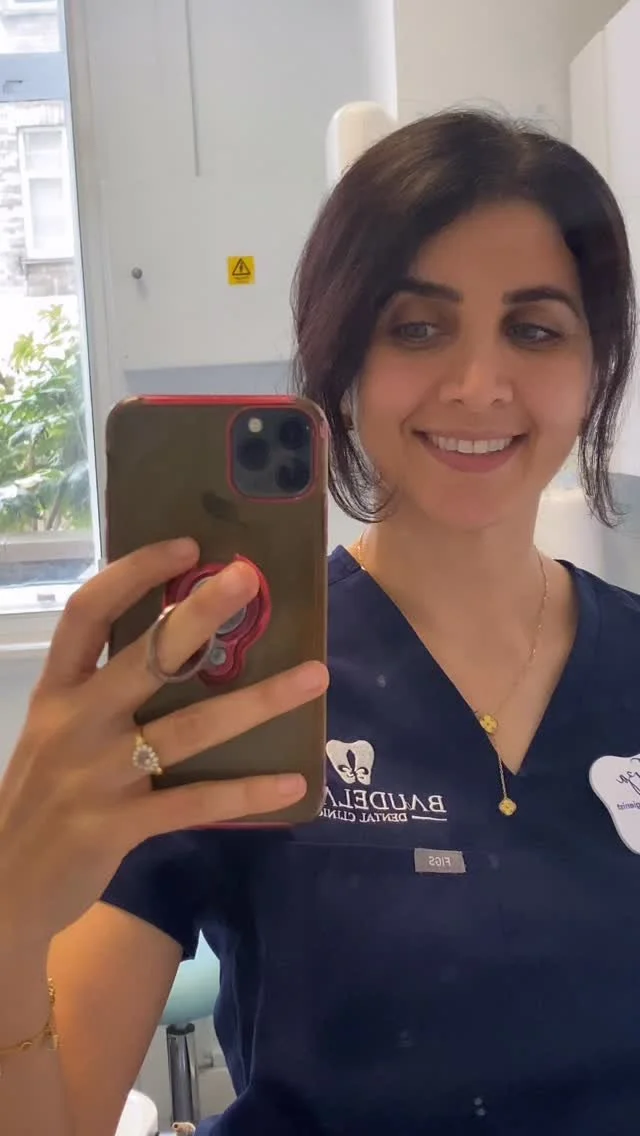
Discover the transformative power of dental implants at our Marylebone Clinic
Dental Implants in Marylebone, London
Replace missing teeth with a solution designed to look, feel and function naturally
A missing tooth can affect much more than your smile. It can change how you eat, how you speak, and how confident you feel. Over time, tooth loss can also affect the surrounding teeth and the bone that once supported the missing tooth.
Dental implants offer a long-term way to replace one tooth, several teeth or even a complete set of teeth.
At Baudelaire Dental Clinic in Marylebone, we take the time to understand what you want from treatment before recommending the most appropriate way to restore your smile.
Whether you've recently lost a tooth, have lived with a gap for years or are struggling with uncomfortable dentures, your journey starts with a thorough assessment and an honest conversation about your options.
What is a Dental Implant?
A dental implant is a small titanium post carefully placed in the jawbone to replace the root of a missing tooth. Over time, the implant integrates with the surrounding bone, creating a stable foundation for attaching your replacement tooth or teeth.
Depending on your needs, implants can be used to support:
A crown to replace a single missing tooth
A bridge to replace several missing teeth
A removable implant-supported denture
A fixed restoration replacing most or all the teeth in an arch
Because an implant replaces the missing tooth root and supports the visible replacement tooth, it can provide a stable, natural-feeling solution for tooth loss.
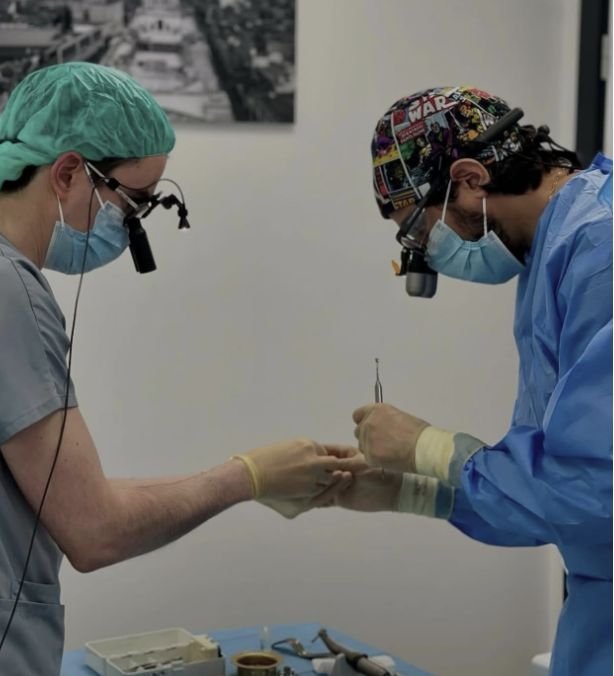
Why choose Dental Implants?
For many people, replacing a missing tooth isn't simply about filling a gap. It's about getting back to eating, speaking and smiling without having to think about their teeth.
Eat with confidence - Missing teeth or loose dentures can make certain foods difficult or uncomfortable to eat. Because dental implants are securely supported by the jawbone, they can restore stability when biting and chewing, helping you enjoy a more varied diet with confidence.
Smile without thinking about the gap - A missing tooth, particularly near the front of the mouth, can make you more conscious of your smile. Your implant restoration is carefully designed to complement your surrounding teeth, creating a replacement that looks natural within your smile.
A replacement tooth that feels secure - Unlike a removable denture, a fixed implant restoration doesn't need to be taken out at night and shouldn't move when you eat or speak. Once you've become accustomed to it, your implant-supported tooth should simply feel like part of your smile.
Protect your neighbouring teeth - A conventional dental bridge often relies on neighbouring teeth for support, which can require those teeth to be prepared. An implant can usually replace a missing tooth independently, helping to preserve healthy neighbouring teeth.
Help preserve your jawbone - After a tooth is lost, the bone that previously supported its root can gradually reduce. Because an implant is placed within the jawbone, biting forces are transferred to the surrounding bone, helping maintain bone at the implant site.
A long-term solution - Dental implants are designed to provide a long-term solution to missing teeth. Their lifespan varies between individuals and no implant can be guaranteed to last forever, but with good oral hygiene, regular professional care and appropriate maintenance, implants can function successfully for many years.
Straightforward everyday care - Implants aren't maintenance-free, but looking after them can become a normal part of your everyday oral hygiene routine. We'll show you exactly how to clean around your implant and will continue to monitor the health of the surrounding gum and bone at your regular appointments.
What can Dental Implants replace?
One of the advantages of implant dentistry is its versatility. You don't necessarily need one implant for every tooth you have lost.
One missing tooth - A single implant can support an individual crown, replacing the missing tooth without usually needing to involve the teeth on either side.
Several missing teeth - If several neighbouring teeth are missing, two or more implants may be able to support a bridge, replacing several teeth with a fixed restoration.
Loose or uncomfortable dentures - Dental implants can be used to support and stabilise a removable denture. The denture connects securely to the implants, providing significantly greater stability while still allowing you to remove it for cleaning.
Most or all of your teeth - If you have lost, or are going to lose, most or all of the teeth in one jaw, several implants can be positioned strategically to support a full arch of replacement teeth. Depending on your circumstances, this may be either a removable implant-supported denture or a fixed restoration. We will explain the advantages and limitations of the different approaches and help you understand which options are appropriate for you.


Am I suitable for Dental Implants?
Many adults with missing teeth may be candidates for implant treatment, but suitability depends on much more than age.
Before recommending treatment, we'll carefully assess your dental and general health and discuss anything that could influence the outcome.
We'll consider factors including:
The health of your teeth and gums
The amount and quality of bone available
Your medical history and any medication you take
Your oral hygiene
The number and position of the teeth being replaced
Your bite
What you want your treatment to achieve
This assessment is important. Successful implant treatment starts with understanding your whole mouth, not just the space where a tooth is missing.
What if I don't have enough bone?
Being told that you've lost bone doesn't automatically mean you can't have dental implants. Sometimes there isn't enough bone in the ideal position to support an implant safely. Depending on your individual circumstances, bone augmentation or grafting may be possible to rebuild the area before or alongside implant placement.
For implants towards the back of the upper jaw, a sinus lift may sometimes be recommended to create sufficient bone to support the implant. We'll recommend additional procedures only when appropriate, and we'll explain why they're needed, what they involve, and how they affect overall treatment time and cost.
What happens when I have a Dental Implant?
Every implant treatment is different, but your journey will typically involve several stages.
Consultation and assessment
Your first appointment is about understanding you. We'll discuss why you've lost your tooth or teeth, any problems you're experiencing, your medical and dental history and what you'd ideally like to achieve. We'll examine your mouth and talk through the different ways your missing teeth could potentially be replaced. Importantly, this is also your opportunity to ask questions. We want you to understand your choices before deciding whether implant treatment is right for you.
Scans and treatment planning
Accurate planning is fundamental to implant treatment. Where appropriate, we may recommend a CBCT scan, which provides a detailed three-dimensional image of your teeth, jaw and surrounding structures. Baudelaire Dental Clinic has an in-house CBCT scanner, so your scan can be carried out here at our Marylebone clinic as part of your treatment planning. Once we have all the information we need, we'll explain our recommendations and provide you with a personalised treatment plan.
Implant placement
Your dental implant is carefully positioned in the jaw under local anaesthetic. You shouldn't feel pain during the procedure, although it's normal to experience some soreness, swelling or discomfort afterwards. We'll give you clear instructions about looking after the area while it heals.
Healing
The implant needs time to become stable within the surrounding bone. This process takes place gradually and the length of the healing period will depend on your individual treatment. Where appropriate, we'll discuss temporary tooth replacement options so you don't necessarily have to live with a visible gap while your implant heals.
Your replacement tooth
Once the implant is ready, your final crown, bridge or other restoration can be attached. Careful attention is given to its shape, colour, position and bite so that your new tooth both functions effectively and complements your smile.
Looking after your implant
Treatment doesn't end when your new tooth is fitted. Good home cleaning and regular dental and hygiene appointments are important for protecting the gum and bone around your implant. We'll help you understand exactly how to care for it.
Will having a dental implant hurt?
This is understandably one of the most common questions we hear. Implant placement is normally carried out using local anaesthetic, so the area will be numb during treatment. Once the anaesthetic wears off, some soreness, swelling or bruising is normal. The amount varies depending on the treatment you've had, and more extensive procedures such as bone grafting may result in a longer recovery. We'll explain what you can expect beforehand and give you appropriate aftercare advice. If you're particularly nervous about dental treatment, please tell us. We'd much rather know how you're feeling so we can help make your experience as comfortable as possible.
How long does dental implant treatment take?
There isn't a single timetable for implant treatment. Straightforward treatment may take several months from implant placement to the final restoration because the implant needs time to integrate with the surrounding bone. More complex treatment involving extractions, bone augmentation or other procedures may take longer. In selected cases, it may be possible to place an implant immediately after a tooth is removed or provide a temporary restoration at an early stage. We won't rush treatment simply to meet a particular timescale. Your treatment plan will be based on achieving a predictable result for your individual circumstances. We'll give you a clearer indication of the likely stages and timings following your assessment.

Dental implant, bridge or denture - which is right for me?
Dental implants aren't the only way to replace missing teeth, and they may not be the right choice for everyone. A missing tooth or teeth may potentially be replaced with an implant, bridge or removable denture.
Dental implant - An implant replaces the missing tooth root and supports a crown, bridge or denture. It can provide excellent stability and usually doesn't require healthy neighbouring teeth to be prepared, but implant placement involves surgery and typically takes longer than some alternatives.
Dental bridge - A bridge fills the space left by a missing tooth with a replacement supported by neighbouring teeth or, in some situations, implants. A conventional bridge can often be provided more quickly than an implant, although the supporting teeth may need preparation.
Denture - A removable denture can replace anything from one tooth to a complete arch of teeth. Dentures avoid implant surgery and can be an excellent solution for some patients, although they are removable and may not provide the same stability as a fixed implant restoration.
So which should I choose? - There isn't one answer that's right for everyone.
Your dental health, the condition of the neighbouring teeth, available bone, treatment preferences, timescale and budget can all influence the decision. Our role is to explain the appropriate options, including their advantages, disadvantages and likely costs, so you can make an informed choice.
Why choose Baudelaire Dental Clinic for Dental Implants?
Choosing implant treatment means trusting a dental team with both your health and your smile. At Baudelaire Dental Clinic, we combine careful treatment planning, modern technology and a multidisciplinary approach with something equally important: taking the time to listen.
Experienced implant care
Dr Dara Beiki has a background in oral surgery and extensive experience within both primary and secondary dental care. His interests include oral surgery, dental implants, and restorative and cosmetic dentistry, so implant treatment can be considered as part of the wider health, function, and appearance of your smile.
Advanced diagnostics in our Marylebone clinic
Our in-house CBCT scanner provides detailed 3D imaging for assessing and planning implant treatment. Having this technology within the practice means your imaging and treatment planning can take place under one roof.
Different disciplines working together
Implant treatment doesn't exist in isolation. Baudelaire Dental Clinic brings together different areas of dentistry within one practice, including implant dentistry, oral surgery, restorative dentistry, endodontics, orthodontics and dental hygiene. Where a case requires input from more than one area of dentistry, your care can therefore be considered as a whole.
Care that's personal to you
No two implant patients are identical. We'll take the time to understand what matters to you, explain your options clearly and recommend treatment based on your individual needs. Our philosophy is simple: we aim to treat our patients with the same care, honesty and respect we would want for our own families.

FAQ
-
The visible part of your implant restoration is designed to complement your surrounding teeth in colour, shape and proportion. The aim isn't simply to fill a gap, but to create a tooth that sits naturally within your smile.
-
In many cases, an implant-supported crown can look very similar to a natural tooth. The final appearance depends on several factors, including the position of the tooth, available gum and bone, and the surrounding teeth. We'll discuss the likely aesthetic outcome as part of your planning.
-
Once your implant has healed and the final restoration is fitted, it is designed to allow you to bite and chew effectively. You'll need to be more careful during the healing stages, and we'll advise you about what to eat following your procedure.
-
Not necessarily. Depending on which tooth is being replaced and the type of treatment you're having, temporary replacement options may be available while your implant heals. We'll discuss this with you before treatment so you know what to expect.
-
This depends on the extent of your treatment and the type of work you do. Some patients return to their normal routine relatively quickly following straightforward implant placement, while others prefer to allow themselves some recovery time. We'll give you more specific advice based on your planned procedure.
-
Sometimes. Immediate implant placement can be appropriate in selected cases, but it depends on factors including the reason the tooth is being removed, infection, available bone and the condition of the surrounding tissues. We'll assess whether immediate or delayed placement offers the more appropriate approach for you.
-
In selected circumstances, it may be possible to provide a temporary tooth at or soon after implant placement. However, "same-day teeth" aren't appropriate for every patient. The implant needs adequate initial stability, and the restoration must be carefully designed to protect it while healing takes place. We'll explain whether this is a suitable option in your case.
-
There isn't a simple upper age limit for implant treatment. Your general health, oral health, bone and individual circumstances are generally more relevant than your age alone.
-
Possibly, but active gum disease needs to be brought under control before implant treatment. A history of gum disease can also increase the importance of careful long-term maintenance and monitoring.
-
Dental implants have a strong record of clinical success, but no implant treatment can be guaranteed to succeed. Outcome is influenced by many factors, including general and oral health, smoking, bone, implant position, oral hygiene and ongoing maintenance. We'll discuss the benefits and relevant risks with you before you decide to proceed.
-
Yes. Although implant treatment is generally predictable, an implant can occasionally fail to integrate with the bone or develop problems later. Good treatment planning, oral hygiene and ongoing professional maintenance all play an important role in reducing these risks.
-
The implant itself can't develop tooth decay, but the tissues surrounding it can become inflamed or infected. This is one reason why daily cleaning and regular professional maintenance remain essential after implant treatment.
-
There isn't a fixed lifespan. Many implants function successfully for a long time, but their longevity depends on factors including your health, oral hygiene, smoking, bite and ongoing professional care. The crown, bridge or denture supported by the implant may also require maintenance or replacement during the implant's lifetime.
-
Your implant needs daily cleaning, just like your natural teeth. Depending on the type of restoration, this may involve a toothbrush together with interdental brushes, floss or other cleaning aids. We'll show you how to clean effectively around your particular implant restoration.
-
No. One implant will commonly support a single replacement tooth, but several missing teeth can sometimes be replaced with a bridge supported by fewer implants. For a complete arch, a carefully planned number of implants can support either a removable denture or a fixed restoration. The appropriate number and position of implants will be determined during treatment planning.
-
Bone loss doesn't necessarily prevent implant treatment. Depending on your circumstances, bone augmentation or grafting may be possible to create sufficient support for an implant. In the upper back jaw, a sinus lift may sometimes be required. We'll explain any additional treatment before you decide whether to proceed.
-
Neither treatment is automatically "better". An implant can replace a missing tooth without usually needing to prepare neighbouring teeth and also replaces the missing root. A bridge avoids implant surgery and may be appropriate when the neighbouring teeth would benefit from restoration anyway. The condition of your mouth and your priorities will help determine which approach is most appropriate.
-
They provide different solutions. Fixed implant restorations offer greater stability and aren't removed for cleaning, while removable dentures avoid implant surgery and can replace multiple teeth more economically. Implants can also be used to stabilise a removable denture, providing an option between the two.
-
That is a personal decision. For some patients, the stability, appearance, ability to eat confidently and potential longevity of implant treatment make it particularly valuable. Others may prefer a bridge or denture because of treatment time, surgery, cost or other considerations. Our job isn't to persuade you to have an implant. It's to help you understand your options well enough to decide what feels right for you.
Book your Implant consultation
Find Us
57 Portland Place
London
W1B 1QN
TEL: 02075 807 146
EMAIL: reception@baudelairedentalclinic.com
Opening Hours
Monday: 08:30 - 17:30
Tuesday: 08:30 - 17:30
Wednesday: 08:30 - 17:30
Thursday: 08:30 - 17:30
Friday: 08:30 - 17:30
Saturday: 09:00 - 13:00
Stay up to date