Dental Hygiene at
Baudelaire Dental Clinic
At Baudelaire Dental Clinic, we are dedicated to empowering our patients with the knowledge and skills needed to maintain their oral health. Regular dental hygiene visits play a crucial role in assessing and enhancing your daily oral care practices.
-
![A person using a tablet on a white marble table with other people in the background.]()
Medical History Update
We’ll start by reviewing your health background, as certain conditions and medications can impact your gums. This helps us tailor the best care for you.
-
![A person is using a tablet to view an image or video at a breakfast table. There are plates with croissants and partially eaten pastries, and a cup of coffee with frothy latte art on a marble table.]()
Oral Health Check
We’ll start by reviewing your health background, as certain conditions and medications can impact your gums. This helps us tailor the best care for you.
-
![Two people, a woman and a man, sit at a cafe table looking at a tablet together, with croissants and coffee in front of them.]()
Customised Care Recommendations
Based on your results, we’ll show you where plaque builds up and give you practical tips to improve your brushing and flossing routine.
-
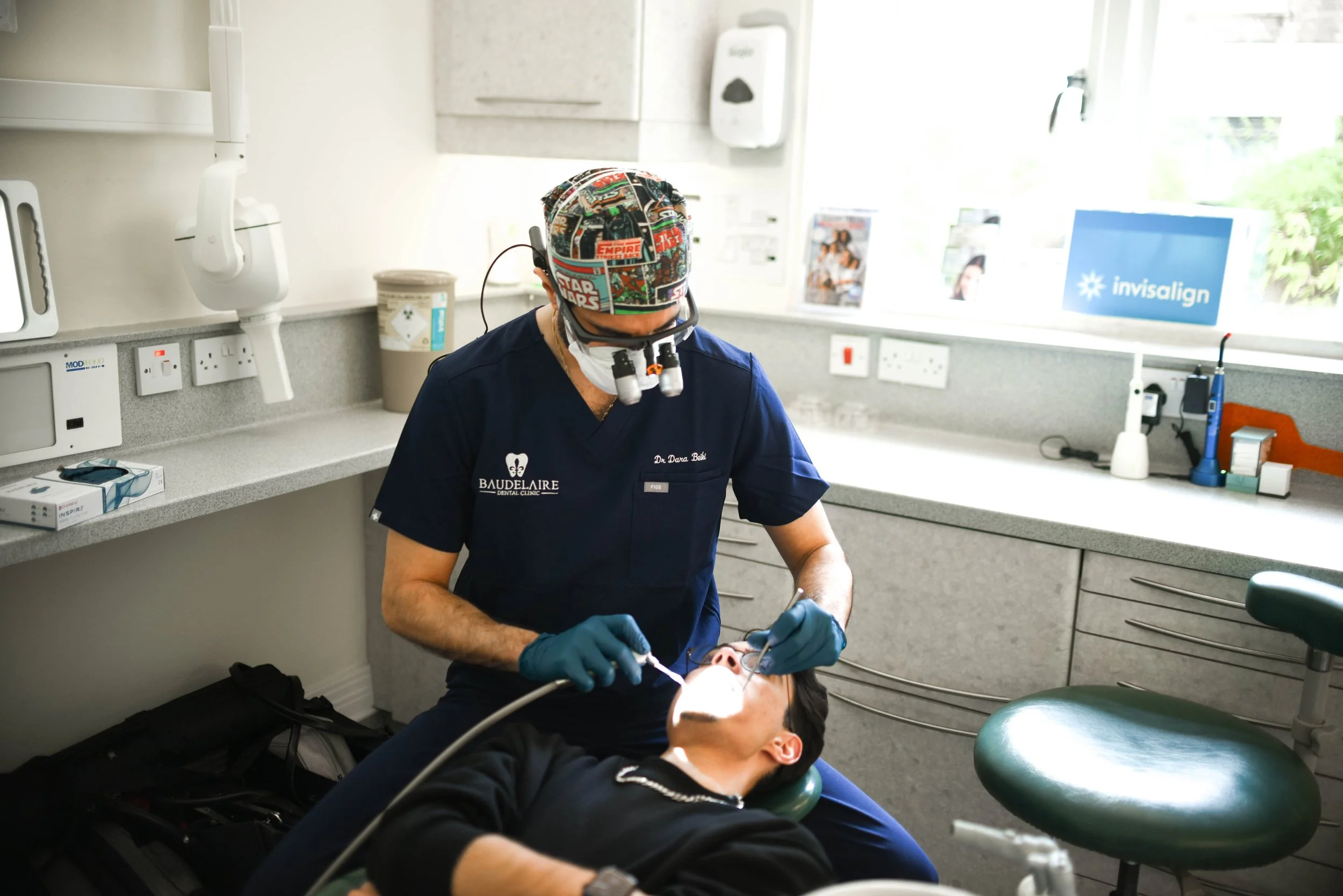
![Dentist wearing a Star Wars hat and headlamp performing a dental procedure on a patient in a dental clinic.]()
Basic Periodontal Exam
We’ll carry out a basic periodontal exam (BPE). We score six sections of your mouth from 0 (healthy gums) to 4 (potential gum disease). A score of 4 requires a comprehensive follow up using a six point pocket chart.
-
![Group of people sitting around a table during a meeting, with a person using a laptop displaying images of teeth and braces.]()
6 Point Pocket Chart
If needed, we’ll measure 6 specific points around each tooth to help determine the extent of gum disease. A normal healthy pocket range from 0–3 millimeters. Deeper ones may signal gum disease and based on the depth will guide us to the right treatment plan.




What are the benefits of Guided Biofilm Therapy?
-
More effective in eliminating biofilm from all surfaces, including those difficult to clean with traditional methods.
-
Gentle on the gums and enamel, reducing discomfort and the risk of sensitivity.
-
Helps in early detection and management of gum disease by emphasizing biofilm control.
-
Visual aids like disclosing agents help patients see where plaque is, encouraging better home care.
-
Including those with sensitive teeth, children, or individuals with dental anxiety.
-
By maintaining a cleaner mouth, it reduces the risk of cavities, gum disease, and other oral health issues.
Differences between Guided Biofilm Therapy and Traditional Scale and Polish:
Choosing between Invisalign and Fixed Metal Braces depends on your dental needs, lifestyle, and personal preferences.
Guided Biofilm Therapy
-
Utilizes a systematic, evidence-based protocol that targets biofilm specifically. It employs advanced tools like air polishing with glycine or erythritol powders, which are gentle yet effective in removing plaque from all surfaces, including hard-to-reach areas.
-
Incorporates air polishing devices, disclosing agents to visualize plaque, and other modern instruments to optimize cleaning efficiency.
-
Generally, more comfortable due to the gentle nature of air polishing and targeted plaque removal, making it suitable for patients with sensitivity or dental anxiety.
Traditional Scale & Polish
-
Usually involves manual scaling with hand instruments to remove tartar and polishing to smooth the tooth surfaces. It often follows a routine without specific focus on biofilm management.
-
Primarily manual tools and polishing pastes
-
Can sometimes be uncomfortable, especially if tartar is hard or extensive.
FAQ
-
Teeth can become stained for many reasons, including the foods and beverages we enjoy and habits like smoking. This can lead to discoloured or yellowish teeth. During a dental hygiene appointment, our hygienists use specialized tools to effectively remove these stains, helping your teeth appear whiter. They can also offer helpful tips on how to prevent future staining and maintain a brighter smile.
-
Plaque is a soft, sticky film of bacteria that forms on your teeth every day. If not removed through regular brushing and flossing, plaque can harden into tartar, also known as calculus. Tartar is a stubborn, mineralized deposit that attaches firmly to your teeth and can only be removed by a dental professional. Both plaque and tartar can lead to tooth decay and gum disease if not properly managed, so maintaining good oral hygiene is key!
-
It's generally recommended to see a dental hygienist every six months for a routine cleaning and check-up. However, the ideal frequency can vary depending on your individual oral health needs. Some people with certain conditions or a higher risk of dental issues might benefit from more frequent visits. Your dental team can help determine the best schedule for you to keep your smile healthy and bright!
-
Severe gum disease, also known as periodontitis, typically requires professional treatment to manage and improve your oral health. Treatment options may include deep cleaning procedures like scaling and root planning to remove plaque and tartar from below the gum line, and in some cases, more advanced treatments such as antibiotics or surgical interventions to reduce the infection and restore gum health. Your dentist or periodontist will develop a personalized treatment plan based on the severity of your condition. It's important to follow their advice and maintain good oral hygiene to help control the disease and prevent further damage. If you have any concerns or questions, don't hesitate to discuss them with your dental professional!
-
Gum disease can have a genetic component, so if your parents have it, you might be at a higher risk. However, genetics are just one factor; your oral hygiene habits, diet, smoking status, and overall health also play significant roles in whether you develop gum disease. To help reduce your risk, it's important to maintain good oral hygiene by brushing and flossing regularly, visiting your dentist for routine check-ups, and avoiding habits that can harm your gums. If you're worried, you can talk to your dentist about your family history—they can provide personalized advice and early prevention strategies.
-
The EMS Airflow machine is a dental device used by dental professionals to help clean teeth more effectively. It works by using a gentle, controlled stream of air, water, and tiny abrasive particles to remove plaque, stains, and debris from the surface of your teeth. This method is often more comfortable and less invasive than traditional cleaning techniques, making it a popular choice for maintaining oral health. The EMS Airflow can also help reach areas that are difficult to clean with regular brushing and flossing, contributing to healthier gums and a brighter smile. If you're curious about having this treatment, your dentist can tell you more about how it might benefit you!
Book your smile consultation
Find Us
57 Portland Place
London
W1B 1QN
TEL: 02075 807 146
EMAIL: reception@baudelairedentalclinic.com
Opening Hours
Monday: 08:30 - 17:30
Tuesday: 08:30 - 17:30
Wednesday: 08:30 - 17:30
Thursday: 08:30 - 17:30
Friday: 08:30 - 17:30
Saturday: 09:00 - 13:00
Stay up to date